
When my mom died, I was ten. My dad did what he could—French toast on Sundays, notes in my lunchbox, tears when he thought I wasn’t watching. He was broken, but he was still my dad.
Cheryl arrived when I was fourteen. Her perfume gave me headaches, her smile never reached her eyes when I was around. Dad thought she was radiant. She played the part well—for him. I knew better. Her kindness had conditions, and I never met them. Still, I tried. He deserved joy.
Five years later, he died suddenly of a heart attack. No warning, no goodbye. I was nineteen, barely out of high school, still figuring out my gap year. Orphaned. My birthday passed uncelebrated, a week after his funeral.
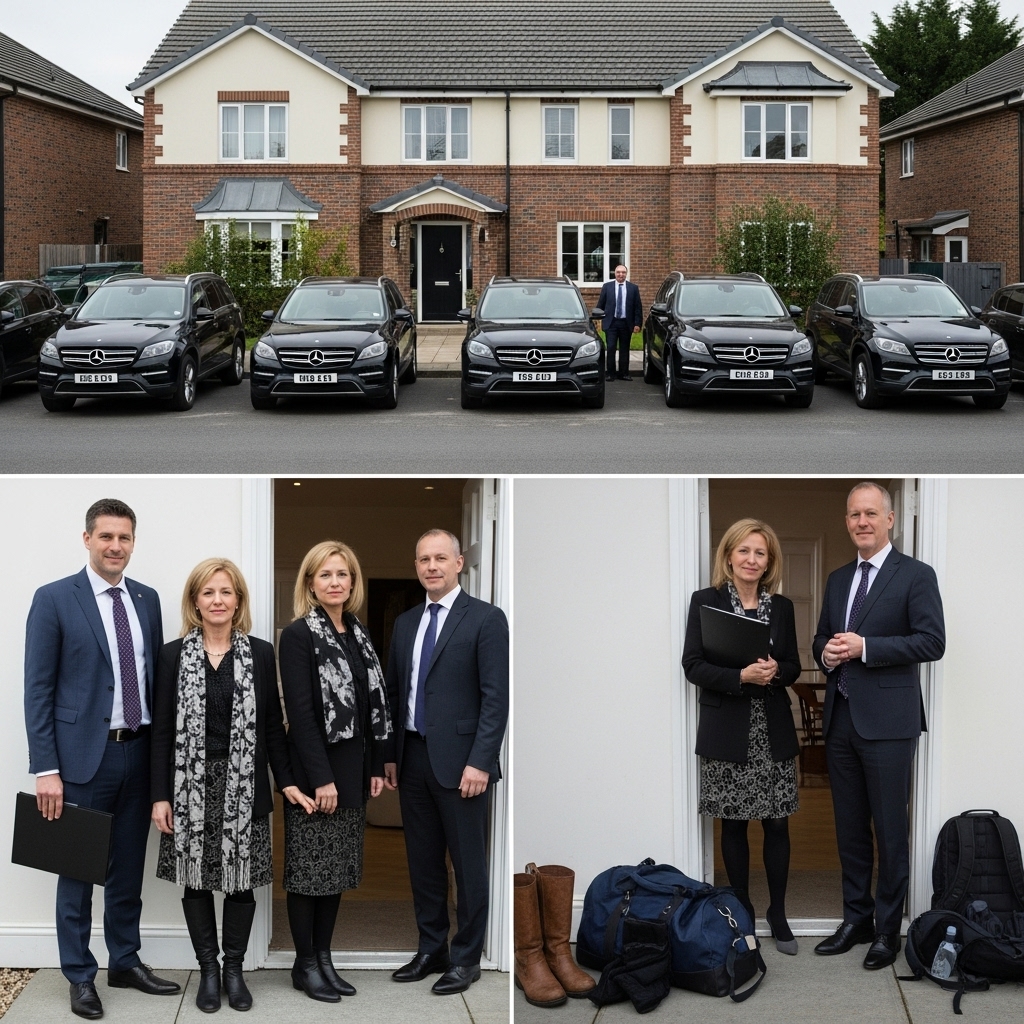
Cheryl wasted no time. She moved through the house like it was hers, tossing Dad’s magazines, replacing family photos. I caught her scrubbing his name off the mailbox. She didn’t flinch. “Eleanor,” she said coldly, “you’re not family anymore. Time to get out.”
I didn’t argue. I packed a duffel bag—boots, jeans, shirts, toiletries, my guitar. I walked past Dad’s scarf on the coat rack but couldn’t touch it. That night, I stayed on my best friend Katie’s couch. She left me a blanket and water. My grief sat heavy, like wet cement. Before sleep, I called my aunt Janine. She gasped at the right moments, then said, “I’ll take care of it, darling. Go back tomorrow morning. I’ll meet you.”
The next day, I pulled up to my childhood home. Five black SUVs lined the curb. Two men in suits stood by the door. My heart pounded—had Cheryl hired security? But when the door opened, Cheryl looked pale, sugar-coating her voice: “Sweetheart! I was just about to call you.”
Janine appeared, heels clicking, folder in hand. “Perfect timing,” she said. “We’re clearing things up. My legal team is ready.” Inside, lawyers sat at the table. Cheryl snapped, pacing. Janine silenced her with a raised hand.
Confused, I asked, “What’s going on?” Janine softened. “Your father never added Cheryl to the deed. He placed the house and land in a trust—in your name, Ellie. Just before your eighteenth birthday. He wanted to tell you later, but his heart attack robbed him of time.”
I gasped. “The house is mine?”
Cheryl laughed harshly. “Thomas would never do that!” A lawyer slid her the trust papers. Calmly, he explained: “You were permitted temporary residence. Now that the beneficiary has revoked permission, you have no legal claim.”
“You can’t kick me out!” she sputtered.
“You have one hour,” the lawyer said. “After that, anything left is abandoned property.”
Cheryl stormed upstairs, muttering, packing under the watch of security. I stood in the kitchen, remembering Dad burning pancakes, laughing: “They’re crispy, Ellie. Whipped cream will fix them.”
Forty-seven minutes later, Cheryl dragged two suitcases downstairs. Blotchy-faced, tight-mouthed, she paused at the door as if to speak—but didn’t. She walked out into sunlight like a ghost. One SUV followed her down the street.
Janine poured us water. We sat at the dining table where Dad once stirred soup. “I miss your mom,” she said. “Especially her pecan pie. I’m terrible at baking, but let’s try.” We found Mom’s recipe book and baked together.
As we mixed, Janine admitted, “I always hated Cheryl. My spirit never sat well with her. But your dad… maybe he didn’t want to see what we did. He trusted me to protect you.”
“Thank you,” I whispered. “You saved me. You saved my home.”
She squeezed my hand. “You’re Eleanor, named after our mother. You’re the granddaughter of a woman who built her house with her bare hands. You’ll never stay down for long.”
That night, I slept in my old room. The walls still held pinholes from posters, corners smelled of lavender and dust. In the closet, I found a box of keepsakes Dad never let Cheryl throw away. I wandered barefoot, touching light switches labeled in his messy handwriting. In his closet, plaid shirts and his tan jacket still hung. I buried my face in it—cedar, aftershave, mornings with coffee.
Later, cross-legged on my floor, guitar in my lap, I played the song I’d written after the funeral. The silence felt different now. The house wasn’t haunted anymore. It was healing. And it was mine.